November 21, 2026
A walkway does more than create a route across the yard. It connects entrances, driveways, and outdoor gathering areas while shaping how the surrounding landscape looks and feels. Achieving a natural fit takes planning: the walkway must be positioned carefully, supported by a stable base, and made from pavers suited to its surroundings. Understanding how local paving contractors approach the project helps explain what happens between the first conversation about a new path and the day the finished surface is ready for use.
Discussing the Walkway During a Consultation
A walkway project begins with a consultation about the property's existing conditions and the purpose of the new path. Some homeowners want a direct connection between a driveway and the front entrance; others need a route around a garden or between outdoor living areas. Uneven surfaces, standing water, and outdated pathways may also influence the direction of the design.
The initial consultation, available within one business day, helps establish these priorities before a proposed layout is developed. Local paving contractors can consider how people will move through the space, which connections matter most, and what appearance would complement the home. Those decisions establish a foundation for the design rather than leaving important questions until installation begins.
Seeing the Proposed Layout on a Scaled Design
A detailed scale design proposal shows the walkway's planned route and how it relates to nearby features. Dimensions and curves are easier to evaluate when they appear on a drawing, especially where the path must meet an existing driveway, entrance, or paved area. Border details and changes in direction can also be considered before the physical work begins.
Local land-use rules can also influence the size of a proposed walkway. According to Bob Vila, towns commonly limit the combined portion of a lot occupied by buildings, walkways, driveways, gravel, and other hardscape features to around 15% to 30%, although the allowance differs by municipality. That makes local restrictions a relevant consideration when deciding how much additional hardscape a property can accommodate. The figure is a general guideline, not a universal rule for Minnesota properties.
Comparing Paver Materials and Design Options
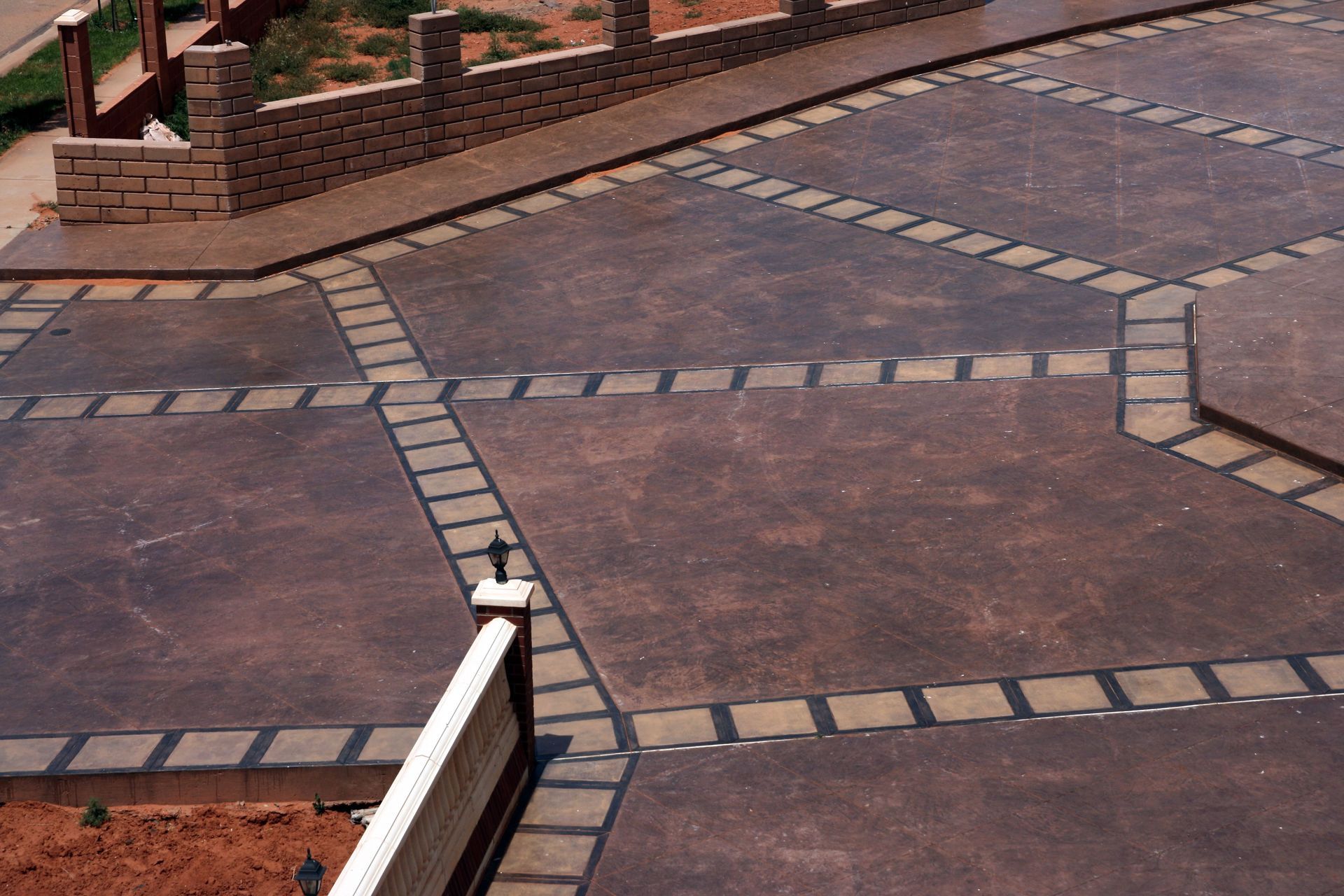
Pavers offer considerable variety without requiring every walkway to follow the same appearance. Classic brick works well with traditional designs, while natural stone can introduce variation in color and texture. Concrete pavers provide another range of shapes and finishes. Custom-cut patterns and decorative borders allow a route to relate visually to a home's architecture or nearby hardscape.
Permeable paver systems are also among the available options. With a suitable base, these systems allow water to pass through the paving assembly rather than relying entirely on surface runoff. Choosing among the materials involves more than color alone; local paving contractors also weigh how each option fits the walkway's layout, anticipated use, and site conditions.
Preparing the Ground for a Stable Walkway
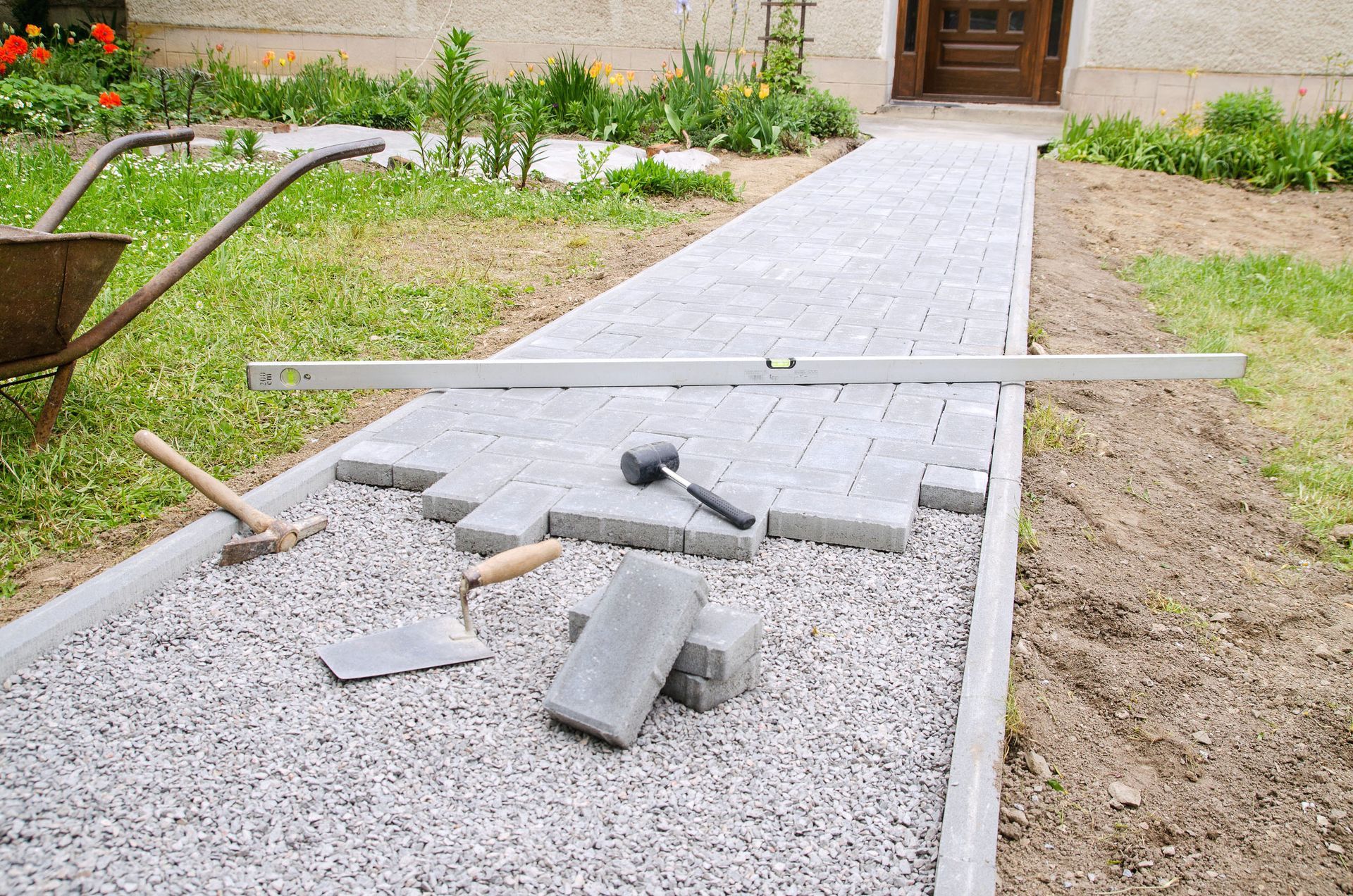
The visible pavers are only one part of an installation. Before they are placed, the area must be prepared to support a consistent walking surface. Ground conditions, irregular elevations, and the intended path influence how preparation proceeds. A properly constructed base is essential because movement beneath the pavers can eventually affect the level and appearance of the walkway above.
Water management is particularly important where heavy rain and seasonal freezing affect the ground. Moisture that accumulates beneath a poorly prepared path can contribute to movement as temperatures change. The preparation performed by local paving contractors takes the paving system and drainage conditions into account, helping the new surface remain functional rather than merely attractive on installation day.
Cutting and Positioning the Pavers
Once the base is ready, the pattern shown in the design begins to take shape. Installers position the stones with attention to spacing, alignment, and how the pathway meets neighboring surfaces. Curves, corners, and borders may require precise cutting so individual pieces fit the intended layout without awkward gaps or abrupt edges.
A walkway with several paver shapes or contrasting colors calls for particular care in maintaining a consistent pattern. The quality of this work is visible along the edges, where the path connects with a driveway, and wherever its direction changes. Thoughtful masonry placement brings the design into the landscape while creating a practical surface for daily movement.
Understanding the Installation Schedule
The length of a walkway installation depends on its size, design complexity, and existing site conditions. For a typical residential project, installation may take roughly two to five days, including preparation, base construction, paver placement, and finishing. A more elaborate layout or challenging ground conditions may change the timeline, while unsuitable weather can affect outdoor work.
The route under construction may be temporarily unavailable, so access around the work area is worth discussing during planning. A project schedule is most useful when it reflects the particular site instead of treating every walkway as identical. Understanding these factors gives homeowners a clearer sense of what the installation involves and why the work proceeds in stages.
Accounting for Freeze-Thaw Conditions
Minnesota's seasonal temperature swings place demands on outdoor paving. Water in the ground can freeze and expand, contributing to movement beneath a walkway. Paver joints can accommodate some movement, but the ability of the finished path to withstand these conditions also depends on the stability of its base and appropriate drainage.
Concrete pavers are available with substantial compressive strength and relatively low moisture absorption. Other materials offer their own visual and functional characteristics. When local paving contractors account for freeze-thaw exposure during material selection and installation, they help create a walkway designed for the conditions it will experience. Durability still depends on the complete paving system, not on the strength of an individual stone alone.
Completing the Edges and Cleaning the Site
Finishing a walkway involves more than placing the last paver. Edges and transitions need attention so the route meets adjacent surfaces comfortably and the overall pattern remains consistent. Depending on the paving system, the joints between stones may require appropriate material to support their intended function. These details help the finished walkway look cohesive and feel practical underfoot.
The installation process also includes cleaning the work area after the paving is complete. Removing leftover materials and debris allows the new path to become part of the surrounding outdoor space rather than looking like an unfinished construction site. For local paving contractors, careful placement and thorough cleanup are both relevant to the completed result.
Understanding Long-Term Walkway Care
Paver walkways are generally straightforward to maintain, although their needs vary with the material, exposure, and level of use. Routine care typically includes keeping debris from building up on the surface. Over time, joint sand may need attention, and certain installations can benefit from periodic sealing. The purpose of ongoing care is to preserve the walkway's appearance and the stability of its individual paving units.
One advantage of individual paving units is that a damaged paver can often be replaced without removing the entire walkway. This flexibility does not eliminate the possibility of wear or ground movement, but it can make localized problems easier to address. A well-installed walkway combines a practical design with an understanding of the care its materials may require over time.
A successful walkway feels connected to the home from the beginning, rather than appearing as an unrelated addition to the landscape. Its long-term usefulness depends on the same care given to its layout, materials, and foundation before the first paver is set. That balance guides how we design and install paver walkways at Pavire Driveways. Contact us to discuss your property and arrange a consultation.